When people buy a pair of prescription glasses, they usually think about the frame, prescription power, lens material, and coatings.
But there is another factor that plays a major role in the final quality of an eyeglass lens: how the lens is designed and manufactured.
Modern prescription lenses are no longer limited to simple, predefined optical surfaces. With the development of digital optical technologies, lenses can now be designed and manufactured with much greater flexibility and precision.
This is the foundation of digital freeform lens technology.
Schneider , the optical lens brand from Smart Optik, combines modern digital lens design with advanced manufacturing technology to produce a range of prescription lenses designed for today's visual needs.
What Are Digital Freeform Lenses?
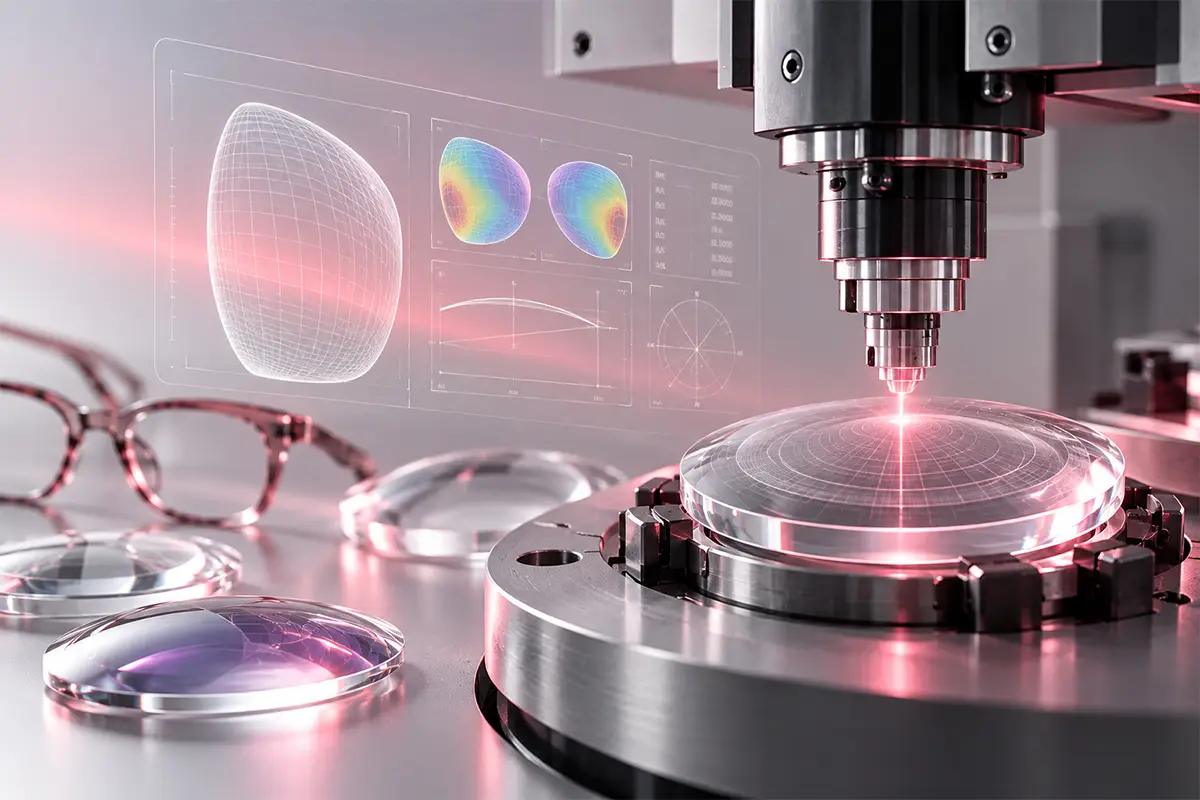
Digital freeform lenses are prescription lenses manufactured using digitally calculated optical surfaces.
Traditional lens designs are generally based on predefined curves and geometries. Digital freeform technology allows the optical surface to be calculated in much greater detail.
Instead of treating the lens surface as a simple curve, the digital design process can calculate different points across the lens surface and determine the required geometry for each area.
The result is a highly sophisticated optical surface that can be optimized for the specific lens design and prescription.
In simple terms:
Traditional lens design:
Uses established, predefined optical geometries.
Digital freeform lens design:
Uses digital calculations to create a more complex and precisely controlled lens surface.
This technology is particularly valuable for modern progressive, personalized, and high-performance prescription lenses.
How Are Modern Eyeglass Lenses Made?
The production of a modern prescription lens starts long before the lens reaches the optical shop. First, the prescription and required lens design are determined. At this stage, understanding different types of eyeglass lenses helps clarify which design and visual features are most appropriate for the wearer. Depending on the lens type, additional information about the wearer, frame, and fitting parameters may also be considered.
The lens design is then calculated digitally. This digital information is transferred to precision manufacturing equipment, where the required optical surface is generated on the lens blank.
After surfacing, the lens undergoes additional processes such as polishing, inspection, coating, and edging before it is fitted into the selected frame.
The result is a production process that connects:
Prescription → Digital Design → Precision Manufacturing → Surface Finishing → Quality Control → Finished Lens
Why Does Digital Freeform Technology Matter?
The most important advantage of digital freeform technology is design flexibility.
A modern prescription lens may need to do much more than simply provide a specific spherical or cylindrical power.
Progressive lenses, for example, must provide different areas for distance, intermediate, and near vision.
The optical characteristics of the lens therefore change continuously across its surface.
Digital freeform technology makes it possible to calculate these complex changes with a high degree of control.
This allows modern lens designers to optimize the optical surface according to the intended lens design rather than relying only on conventional geometries.
Digital Freeform Technology in Progressive Lenses
Progressive lenses are one of the clearest examples of the importance of modern digital lens technology.
A progressive lens needs to provide:
Distance vision
Intermediate vision
Near vision
A smooth transition between these areas
At the same time, unwanted optical effects need to be carefully managed.
Because the optical power changes continuously across the lens, the exact geometry of the surface becomes extremely important.
Digital freeform design allows these changes to be digitally calculated and incorporated into the lens surface.
For the wearer, this can translate into a more sophisticated lens design that is tailored to the intended visual requirements.
Personalization: When One Lens Does Not Fit Everyone
Every prescription is different.
But even two people with the same prescription may not necessarily have identical visual requirements.
Frame size, fitting position, working distance, daily activities, and the type of lens selected can all influence the final visual experience.
Digital lens design provides the flexibility needed to take more of these factors into account.
This is particularly important for personalized and premium lens designs.
Instead of thinking about a prescription lens as simply a piece of material with a power, modern digital technology allows the lens to be considered as a complete optical system designed around the wearer.
What Does This Mean for the Person Wearing the Glasses?
Technology inside a lens is valuable only when it ultimately improves the product that reaches the consumer.
For the wearer, advanced digital lens design can offer several important advantages.
More sophisticated optical designs
Complex lens surfaces can be digitally calculated according to the intended optical performance.
Greater design flexibility
Digital manufacturing makes it possible to develop lens geometries that would be difficult or impractical to produce using conventional methods.
Better personalization
Modern lens designs can incorporate additional parameters when the product is designed for personalization.
Consistent production
Computer-controlled manufacturing helps reproduce complex optical surfaces accurately and consistently.
Schneider Digital Freeform Lenses
Schneider Digital Freeform Lenses are part of Smart Optik's approach to modern prescription lens manufacturing.
The Schneider brand combines advanced digital optical design with precision manufacturing to offer lenses for different visual needs, from everyday single vision prescriptions to more sophisticated progressive and personalized designs.
The objective is not simply to manufacture a lens with the correct prescription.
It is to create an optical surface that is carefully designed for the intended visual function.
This distinction becomes increasingly important as lens designs become more sophisticated.
Technology Behind the Lens
Producing a modern freeform lens requires more than sophisticated software.
The digital design must be translated accurately into the physical surface of the lens.
This requires precision equipment and a carefully controlled manufacturing process.
At Smart Optik, Schneider lenses are produced using modern digital freeform manufacturing technology and advanced optical production equipment.
The combination of digital lens calculation and precision manufacturing allows complex optical designs to be transformed into finished prescription lenses.
From Digital Data to a Finished Schneider Lens
A simplified view of the process looks like this:
Prescription Analysis
The prescription and requirements of the selected lens design are determined.
Digital Optical Calculation
Specialized software calculates the required lens surface based on the selected design.
Freeform Surfacing
Precision equipment creates the digitally calculated optical geometry on the lens.
Surface Finishing
The lens surface is polished and prepared for the subsequent production stages.
Coating
Depending on the selected product, appropriate coatings can be applied to provide properties such as anti-reflection, scratch resistance, UV protection, or other performance characteristics.
Quality Control
The finished lens undergoes inspection to verify that it meets the required optical and manufacturing specifications.
Edging and Fitting
Finally, the lens is precisely shaped and fitted into the selected frame.
Every stage contributes to the final performance of the finished lens.
Why Modern Lens Manufacturing Matters
Consumers often focus on the visible parts of their glasses.
They choose a frame, select a lens material, and perhaps add an anti-reflective coating.
But the optical design and manufacturing process are equally important.
Two lenses may have similar materials and the same basic prescription while still having different optical designs and manufacturing characteristics.
This is why modern lens technology matters.
The final product is influenced by the combination of:
Optical design
Prescription
Lens material
Digital calculation
Manufacturing precision
Surface finishing
Coating technology
Accurate fitting
A high-quality lens is therefore the result of an entire system rather than a single manufacturing step.
Schneider: Modern Technology for Modern Vision
The way people use their eyes has changed dramatically.
Today, people move between smartphones, computers, meetings, driving, reading, and outdoor activities throughout the day.
Their lenses therefore need to do more than simply correct refractive errors.
They need to provide optical solutions designed for increasingly complex visual demands.
Schneider's digital freeform technology represents an important part of this evolution.
By combining digital optical design with modern manufacturing capabilities at Smart Optik, Schneider lenses are designed to meet the changing needs of today's spectacle wearers.
Final Thoughts
Modern eyeglass lenses are the result of much more than a prescription and a piece of optical material. Digital freeform technology has transformed the way complex lens surfaces can be designed and manufactured, opening the door to more sophisticated, flexible, and personalized optical solutions.
For Schneider, this technology is part of a broader commitment to improving the modern eyeglass lens manufacturing process through advanced digital design and precision manufacturing.
The next time you put on a pair of Schneider lenses, remember that the technology behind the lens is just as important as what you can see through it.