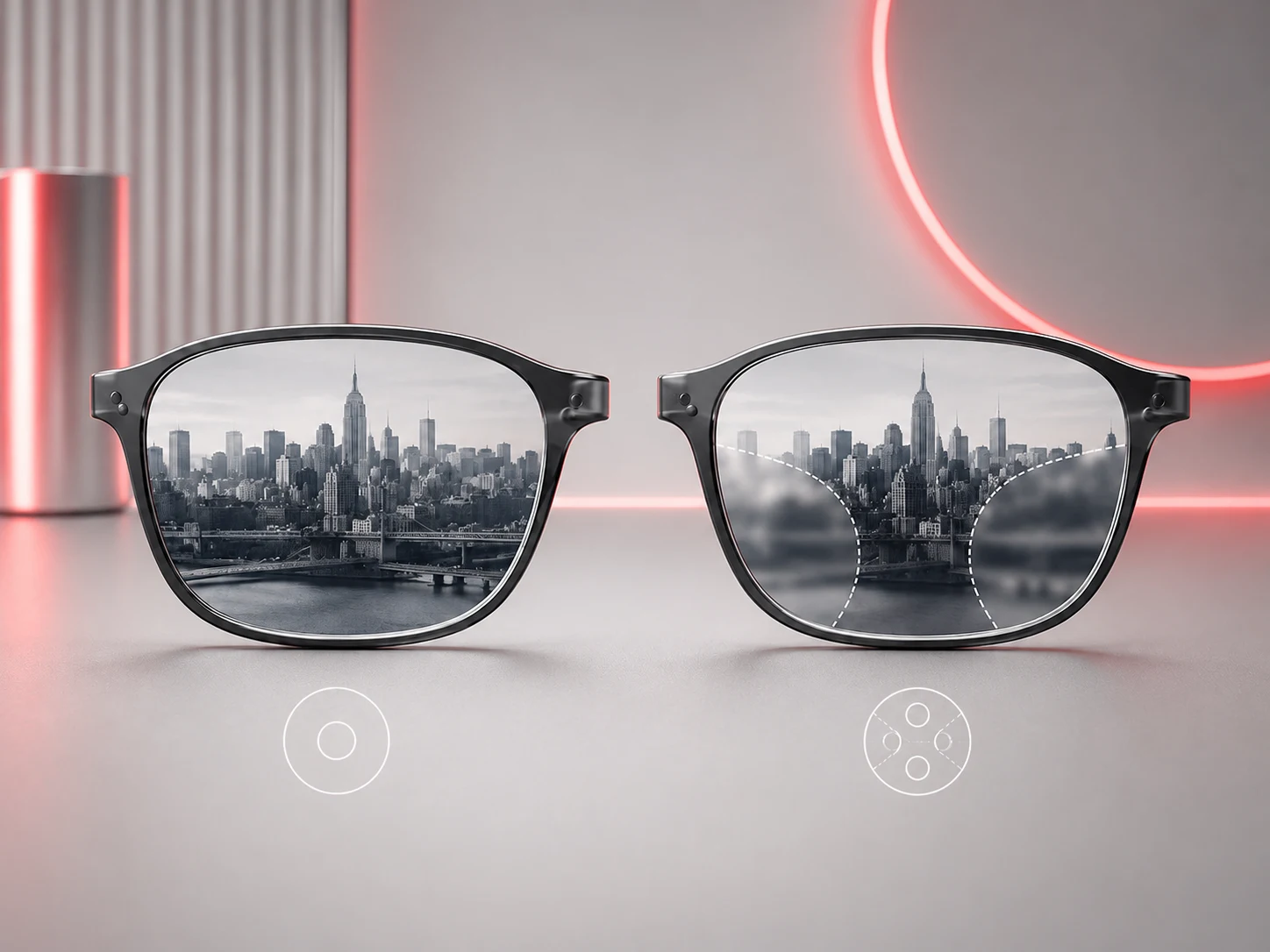
Progressive vs Single Vision Lenses: Which Lens Is Better?
Categories: Posts Date: 23/06/2026 Author: AdminUnderstanding the Difference Between Single Vision and Progressive Lenses
When purchasing new eyeglasses, one of the most common questions people ask is which lens option offers the best eyeglass lenses for your vision, visual comfort, and everyday needs.
Should I choose single vision lenses or progressive lenses?
The answer depends on your age, prescription, visual needs, and lifestyle. Both lens types are designed to improve vision, but they serve different purposes and offer distinct advantages. In this guide, we'll explore the progressive vs single vision difference, explain how each lens works, and help you determine which lens is better for your glasses.
What Are Single Vision Lenses?
Single vision lenses are the most common type of prescription lens. As the name suggests, they contain a single optical power across the entire lens surface. They are typically prescribed for:- Nearsightedness (Myopia)
- Farsightedness (Hyperopia)
- Astigmatism
- Reading correction Because the prescription remains consistent throughout the lens, single vision lenses provide a wide, clear field of view for one primary distance. For younger wearers and individuals who only need correction for either distance or near vision, single vision lenses are often the simplest and most effective solution.
What Are Progressive Lenses?
Progressive lenses are advanced multifocal lenses designed to provide clear vision at multiple distances without visible segment lines. A progressive lens combines:- Distance vision at the top
- Intermediate vision in the middle
- Near vision at the bottom

Progressive vs Single Vision Difference
Although both lens types correct vision, they are designed for different visual needs.Single Vision Lenses
- One prescription power
- Wide viewing area
- Easy adaptation
- Ideal for one viewing distance
Progressive Lenses
- Multiple prescription powers
- Distance, intermediate, and near correction in one lens
- Greater visual flexibility
- Designed for multifocal needs
Who Should Choose Single Vision Lenses?
Single vision lenses are often the best choice for:Younger Adults
Most people under 40 only require one prescription correction and can comfortably use single vision lenses.Students
Students often benefit from simple and effective distance or reading correction.Dedicated Reading Glasses
Single vision lenses remain an excellent option for people who only need assistance with reading.Computer-Specific Eyewear
Single vision occupational lenses can also be optimized for screen distances. For these users, the simplicity and wide visual field of single vision lenses offer significant advantages.
Who Should Choose Progressive Lenses?
Progressive lenses are usually recommended for people who require vision correction at more than one distance.Adults Over 40
As presbyopia develops, reading small text becomes increasingly difficult. Progressive lenses help restore comfortable near vision while maintaining clear distance vision.Professionals
Many professionals switch constantly between:- Computer screens
- Documents
- Meetings
- Driving
Active Lifestyles
Instead of carrying multiple pairs of glasses, progressive wearers can rely on one pair for most daily activities.
Advantages of Single Vision Lenses
Single vision lenses remain popular for several reasons.Wider Viewing Area
Because the entire lens contains one prescription, users enjoy a broad field of clear vision.Easier Adaptation
Most people adapt immediately to single vision lenses.Lower Cost
Single vision lenses are typically more affordable than progressive designs.Excellent Optical Clarity
They provide precise vision correction with minimal adaptation requirements.Advantages of Progressive Lenses
Modern progressive lenses offer numerous benefits.Multiple Distances in One Lens
Distance, intermediate, and near vision are integrated into a single lens.No Visible Lines
Unlike traditional bifocals, progressive lenses provide a seamless appearance.Greater Convenience
Users no longer need separate reading and distance glasses.Natural Vision Experience
Advanced lens designs allow smooth transitions between viewing distances.Are Progressive Lenses Difficult to Adapt To?
One of the most common concerns about progressive lenses involves adaptation. While progressive lenses generally require a short adjustment period, modern freeform technologies have significantly improved the wearer experience. Today's premium progressive designs offer:- Wider viewing zones
- Reduced peripheral distortion
- Improved intermediate vision
- More natural visual transitions
How Modern Freeform Technology Improves Progressive Lenses
The quality of a progressive lens depends heavily on its design and manufacturing technology. Traditional progressive lenses were based on standardized designs that provided limited personalization. Modern freeform technology has transformed progressive lens performance. Benefits include:- Higher optical precision
- Personalized lens calculations
- Wider fields of vision
- Improved visual comfort
- Enhanced wearer satisfaction

Which Lens Is Better for Glasses?
The answer depends entirely on your visual needs.Single Vision Lenses May Be Better If:
- You only need one prescription correction.
- You are under 40 years old.
- You want the widest possible viewing area.
- You require dedicated reading or computer glasses.
Progressive Lenses May Be Better If:
- You need correction at multiple distances.
- You have presbyopia.
- You want one pair of glasses for daily activities.
- You prefer convenience and flexibility.
Schneider Progressive Lens Technology
At Schneider, we believe that advanced lens technology should provide both precision and comfort. Our progressive lens solutions are developed using sophisticated freeform manufacturing technologies designed to optimize visual performance across all viewing distances.Why Choose Schneider Progressive Lenses?
- Advanced freeform technology
- High-precision digital surfacing
- Wide viewing zones
- Smooth visual transitions
- Enhanced wearer comfort
- Premium optical quality For patients seeking modern multifocal vision correction, Schneider progressive lenses offer a combination of innovation, precision, and visual comfort.