Types of Eyeglass Lenses: Which Lens Type Is Right for You?
Categories: Posts Date: 03/06/2026 Author: AdminA Consumer’s Guide to Understanding Eyeglass Lens Options
When purchasing eyeglasses, most people focus on choosing a frame they like. However, the lenses are the part of your eyewear that directly affects how well you see and how comfortable your vision feels throughout the day. Today’s optical industry offers a wide range of lens designs, each developed to solve specific vision challenges. Whether you need help seeing distant objects, reading small text, or managing age-related vision changes, there is a lens type designed for your needs. In this guide, we will explore the most common types of eyeglass lenses and, for a deeper understanding, you can refer to our Complete Guide to Eyeglass Lenses, which explains everything in detail and helps you make the right choice.
Why Different Lens Types Exist
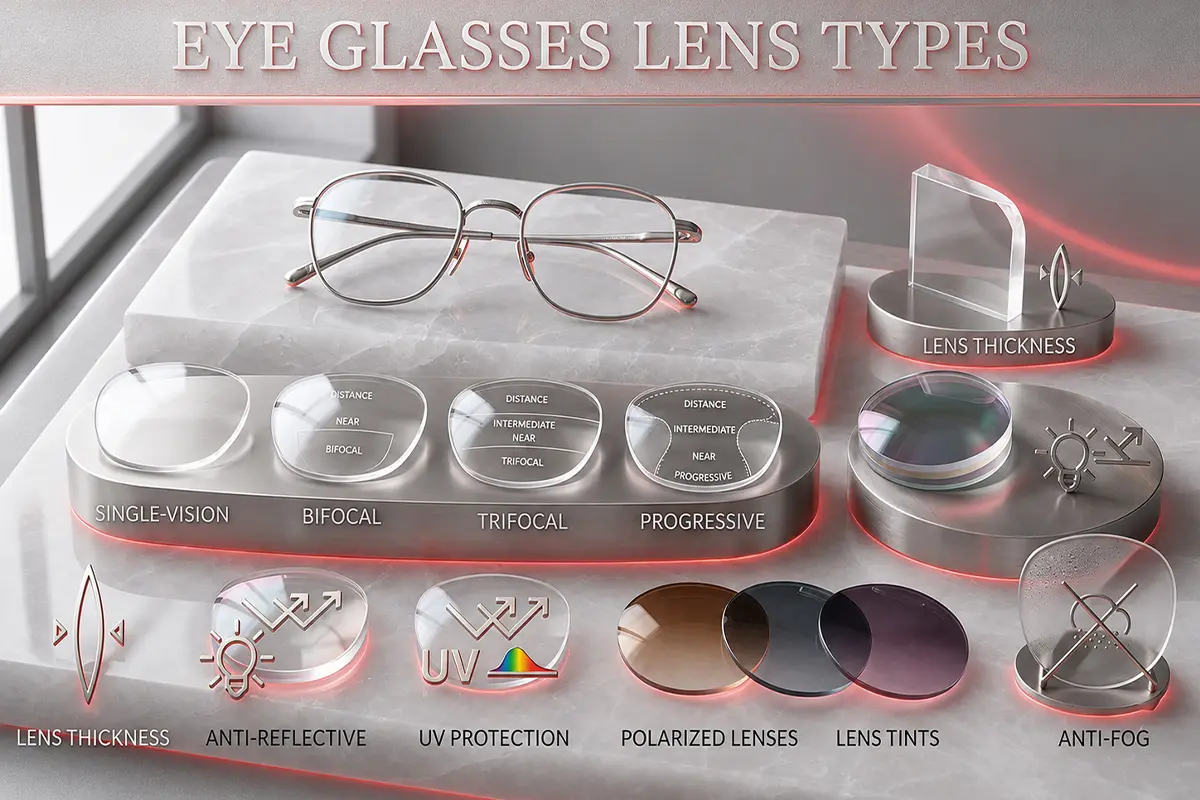
Human vision is not the same for everyone. Some people struggle to see distant objects clearly, while others have difficulty reading up close. Many adults eventually require correction for multiple viewing distances as they age. Different lens designs exist because different visual problems require different optical solutions. The most commonly prescribed lens types include:- Single vision lenses
- Progressive lenses
- Bifocal lenses
Single Vision Lenses
The Most Common Lens Type
Single vision lenses are the simplest and most widely prescribed type of eyeglass lens. They contain one prescription power across the entire lens surface. This means they are designed to correct vision at a single distance only. Single vision lenses are commonly used for:- Distance vision
- Reading
- Computer work
Advantages of Single Vision Lenses
- Easy to adapt to
- Cost-effective
- Wide viewing area
- Excellent optical simplicity
- Suitable for most younger wearers
Limitations
Because they only correct one viewing distance, after 40 users may need multiple pairs of glasses for different activities.Progressive Lenses
One Lens for Multiple Distances
Progressive lenses are designed for people who need vision correction at more than one distance. Unlike single vision lenses, progressive lenses contain multiple prescription zones that blend smoothly together. Typically, the lens provides:
- Distance vision at the top
- Intermediate vision in the middle
- Near vision at the bottom
Benefits of Progressive Lenses
- Multiple viewing distances in one lens
- No visible dividing lines
- Modern appearance
- Convenient daily use
- Reduced need for multiple pairs of glasses
Considerations
Progressive lenses often require a short adaptation period as wearers learn to use different areas of the lens. Fortunately, modern freeform technologies have significantly improved adaptation and visual comfort.Bifocal Lenses
The Traditional Multifocal Solution
Before progressive lenses became popular, bifocal lenses were the primary solution for people needing both distance and near correction. A bifocal lens contains two distinct optical zones:- Upper section for distance vision
- Lower section for near vision
Advantages of Bifocal Lenses
- Clear distance and reading correction
- Simple design
- Easy near vision access
- Often lower cost than progressive lenses
Limitations
Unlike progressive lenses, bifocals do not provide intermediate vision correction. This can sometimes create challenges during activities such as computer work. Bifocal Lens Design
Difference Between Lens Types
Understanding the difference between lens types helps consumers make more informed decisions. Each design serves a different purpose, making it important to match the lens to the user's lifestyle and vision needs.
Which Lens Type Is Right for Me?
The answer depends on several factors.Choose Single Vision Lenses If:
- You only need one vision correction distance
- You are younger and do not have presbyopia
- You want simple and affordable lenses
Choose Progressive Lenses If:
- You need distance and near correction
- You want one pair of glasses for daily activities
- You regularly switch between reading, computer use, and distance viewing
Choose Bifocal Lenses If:
- You need distance and reading correction
- You prefer clearly separated vision zones
- You do not require extensive intermediate vision

How Modern Lens Technology Has Improved Vision
Today's lenses are far more sophisticated than those available even a decade ago. Advanced manufacturing methods now allow:- More precise prescriptions
- Better optical performance
- Wider viewing areas
- Reduced distortion
- Personalized lens designs

Discover Schneider Lens Technology
The quality of a lens depends not only on its design but also on how accurately it is manufactured. Schneider Optical Machines supports optical laboratories worldwide with technologies for:- Digital freeform lens production
- Precision surfacing
- Advanced polishing systems
- Automated quality control
- Modern ophthalmic manufacturing solutions
Final Thoughts
Choosing the right lens type is one of the most important decisions when purchasing eyeglasses. Single vision lenses offer simplicity and effectiveness for one viewing distance. Bifocal lenses provide dual-distance correction, while progressive lenses deliver seamless vision across multiple distances. At Smart Optik, our mother collection that brings together several premium brands, we help you understand these differences so you can select eyewear that perfectly matches your visual needs, lifestyle, and long-term comfort goals.
As lens technologies continue to evolve, consumers have access to more advanced and personalized vision solutions than ever before.