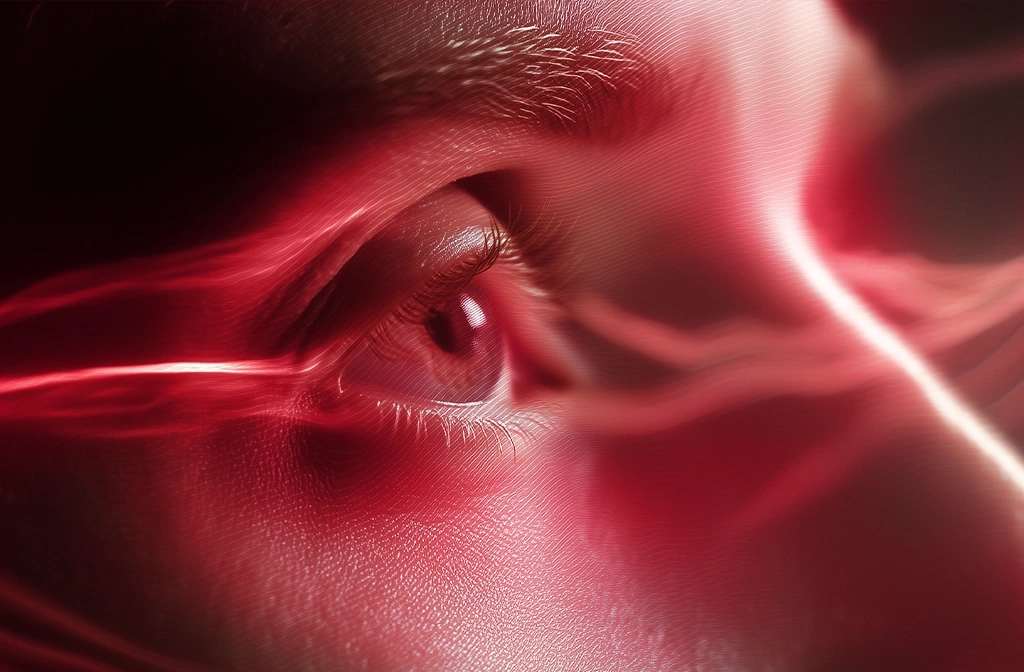
Near-infrared (NIR) radiation—wavelengths between approximately 700 to 1400 nanometers—can be both beneficial and potentially harmful depending on exposure levels and duration. Here's a breakdown of its effects on skin and eyes:
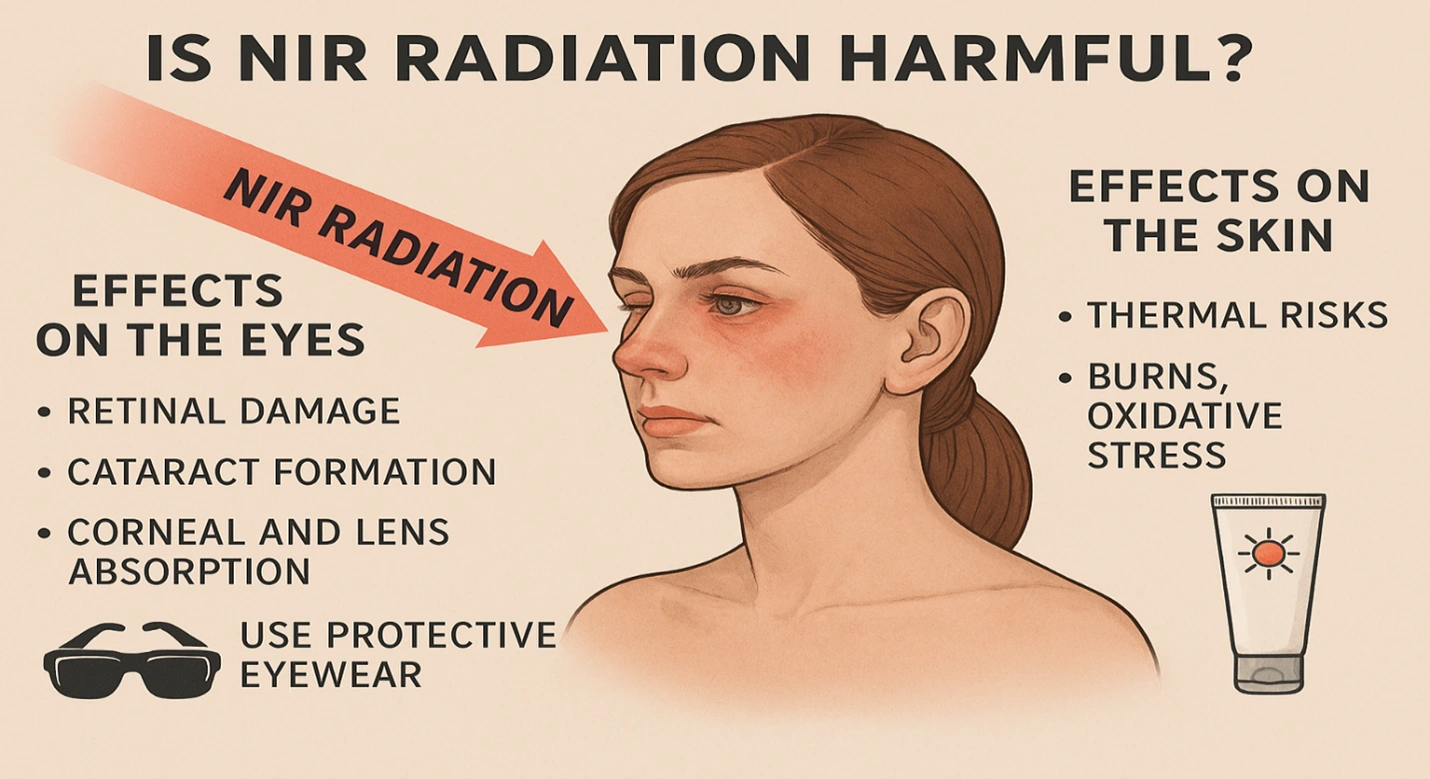
Effects on the Eyes
Retinal Damage: NIR can penetrate deeply and cause thermal injury to the retina, which lacks pain receptors—so damage may go unnoticed until it's severe.
Cataract Formation: Prolonged exposure may denature lens proteins, leading to cataracts.
Corneal and Lens Absorption: These parts of the eye absorb NIR, increasing the risk of overheating and long-term damage.
Safety Measures: Protective goggles with an Optical Density rating of 5 or higher and UV400 protection are recommended when working with high-intensity NIR sources.
Effects on the Skin
Generally Safe at Low Levels: Everyday exposure (e.g., sunlight or consumer electronics) is typically not harmful.
Therapeutic Use: NIR is used in photobiomodulation to promote healing and reduce inflammation. It penetrates deeper than visible light, stimulating cellular activity.
Thermal Risks: High-intensity or prolonged exposure can cause skin heating, potentially leading to burns or oxidative stress.
Safety Tips
Use protective eyewear when working with NIR lasers or industrial sources.
Limit exposure time and maintain a safe distance from NIR-emitting devices.
Avoid direct eye contact with NIR sources, especially in medical or industrial settings.
How Sunlight Wavelengths Affect the Eye
Wavelength Range
Type of Radiation
Primary Absorption Site
Potential Effects
200–300 nm
UV-C (filtered by atmosphere)
—
—
300–400 nm
UV-B & UV-A
Cornea & Lens
Photokeratitis, cataracts
400–480 nm
Blue Light
Retina
Oxidative stress, macular degeneration
480–700 nm
Visible Light
Retina
Normal vision, but intense exposure can cause retinal damage
700–1400 nm
Near-Infrared (IR-A)
Retina & Lens
Thermal stress, cataract formation
>1400 nm
Mid/Far Infrared
Cornea
Mostly absorbed before reaching retina
Key Insights
UV and Blue Light: These carry high photon energy and can trigger molecular changes, leading to DNA damage and protein aggregation in ocular tissues.
Infrared Radiation: Though lower in energy, it penetrates deeply and can cause heating effects, especially in the lens and retina.
Solar Noon Risk: At noon, the intensity of all these wavelengths is highest, increasing the risk of cumulative damage if exposed without protection.